This website for the UK public is developed and funded by AstraZeneca as part of a disease awareness campaign. It is for information only, not for diagnosis. If you are concerned about symptoms, please see your GP or another healthcare professional.


This website for the UK public is developed and funded by AstraZeneca as part of a disease awareness campaign. It is for information only, not for diagnosis. If you are concerned about symptoms, please see your GP or another healthcare professional.


ATTRv amyloidosis is a rare condition, so you may not know much about it. You might also find it difficult to find clear and simple information online. Here, you can learn all about what ATTRv amyloidosis is, what causes it and the different ways it can affect the body.
ATTR amyloidosis is a rare but serious condition. Experts estimate that the hereditary type (ATTRv) affects between 1 and 9 out of every 1,000,000 people in the general population.
However, a faulty gene that causes the condition (the ‘V50M mutation’) may affect people from Portugal at a much higher rate. For example, about 1 in 538 people with heritage from the North of Portugal are thought to be carriers of the V50M mutation.
Not everyone with the mutation will be affected. But if you have family heritage from Portugal, knowing what signs to look out for is really important. Early diagnosis may give you the best chance of managing your condition before it progresses.
You can learn more about how ATTRv amyloidosis is caused and inherited in the Causes section below.
ATTRv amyloidosis happens when a protein in the body called transthyretin, or ‘TTR’, becomes unstable. If you are not sure what proteins are, it can help to think of these as essential building blocks in the body.
The TTR protein can be unstable for two reasons:
When the TTR protein is unstable, it breaks apart and folds incorrectly. Lots of these folded TTR proteins clump together and form something called ‘amyloid deposits’. Over time, these amyloid deposits build up in different parts of the body. This can cause a lot of different symptoms.
Amyloid deposits mostly affect:
For people with the mutated gene, amyloid deposits may build up for their whole life. People who are affected may start to notice symptoms early (between 30 and 40 years of age) or late (between 50 and 60 years of age).
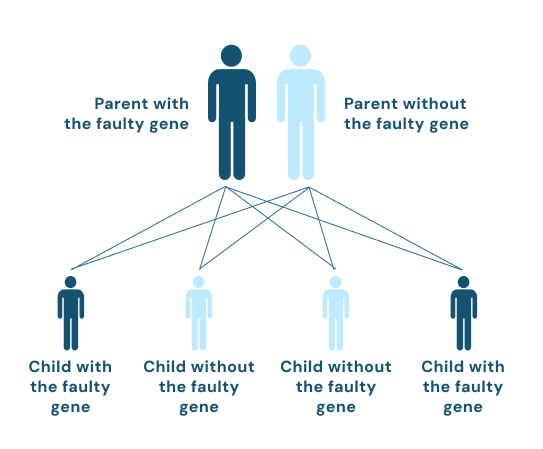
With the hereditary type, just one copy of the faulty gene can cause ATTRv amyloidosis.
If one parent is a carrier of the mutated gene, each child has a 50% chance of inheriting it. You can see this explained in the visual.
Learning that you or someone in your family has a hereditary condition can be difficult. Many people may feel worried about their future or fear passing the condition along. There is lots of support available to help families who are at risk or who have been diagnosed.
Learn more on our Finding support page.

Amyloid deposits can build up in many parts of the body. These can affect the nerves, gut, kidneys, liver and heart. This means that there are lots of possible symptoms of ATTRv amyloidosis. One person is unlikely to have all of the possible symptoms. The condition may also look different in every person. Even members of the same family who all have ATTRv amyloidosis can have completely different symptoms.
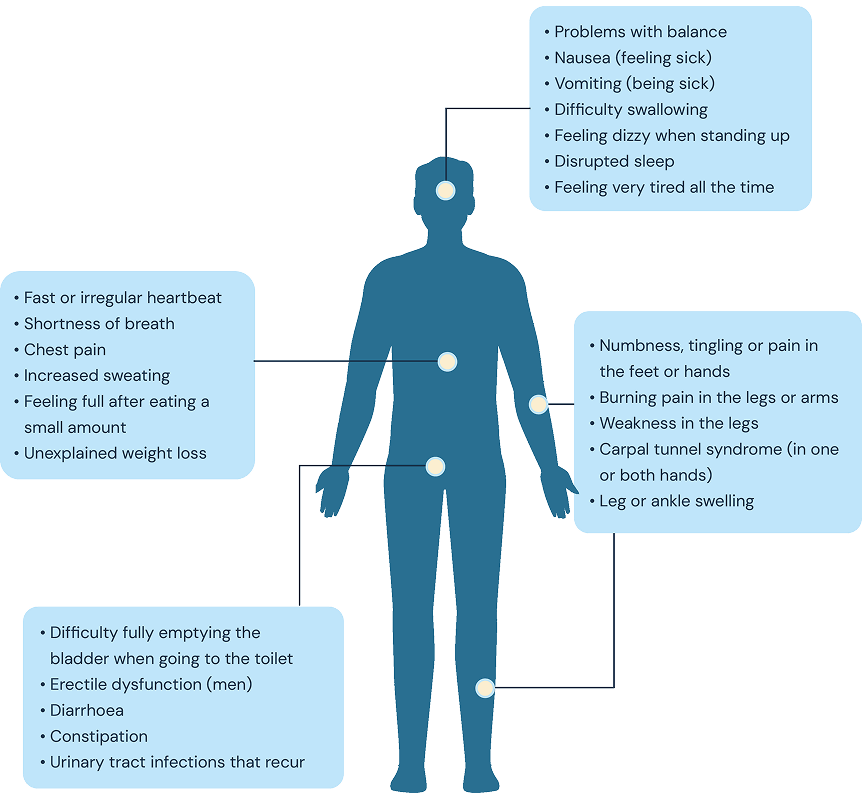
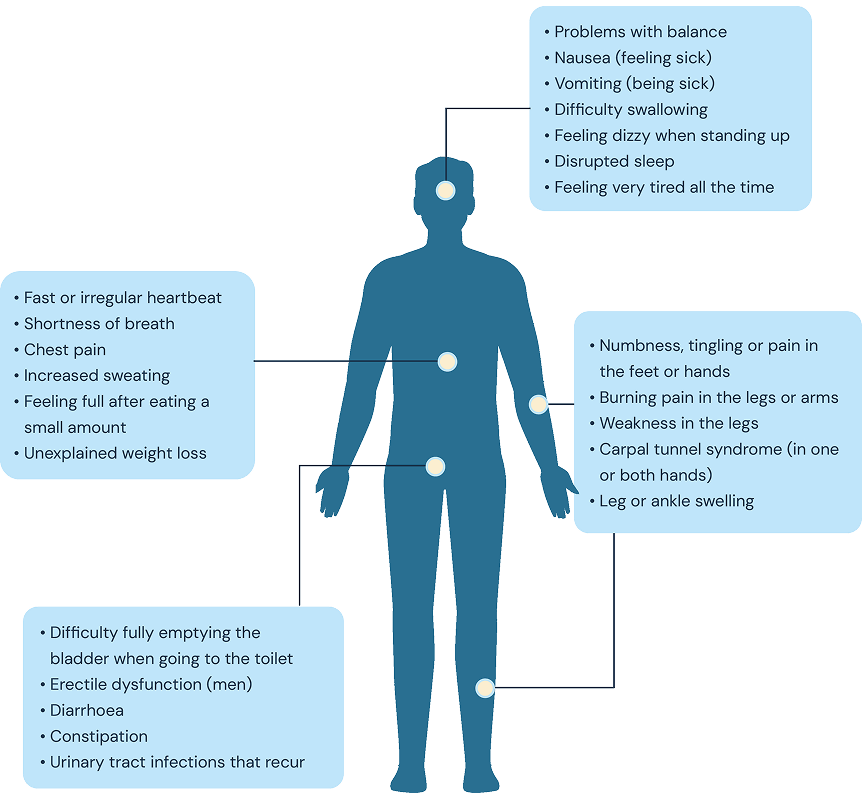
ATTRv amyloidosis is a progressive condition. This means it gets worse over time. Certain symptoms can get worse and you might even notice new symptoms. Even if you have lived with ATTRv amyloidosis for a while, knowing what to look out for can help you monitor your condition.
For guidance on how to manage new or existing symptoms, speak to a healthcare professional and visit our Living with ATTRv amyloidosis page.
If you have any feedback on this resource, please fill in our questionnaire by clicking here.
GB-77624 | August 2026 | To be reviewed August 2028